Working Abroad · Guide
How to Work Abroad from the Philippines: A Step-by-Step Guide for First-Time OFWs
Your first overseas job is a sequence of checks, not a single leap. Here is the practical order to follow, from choosing a target country to your first month at work.
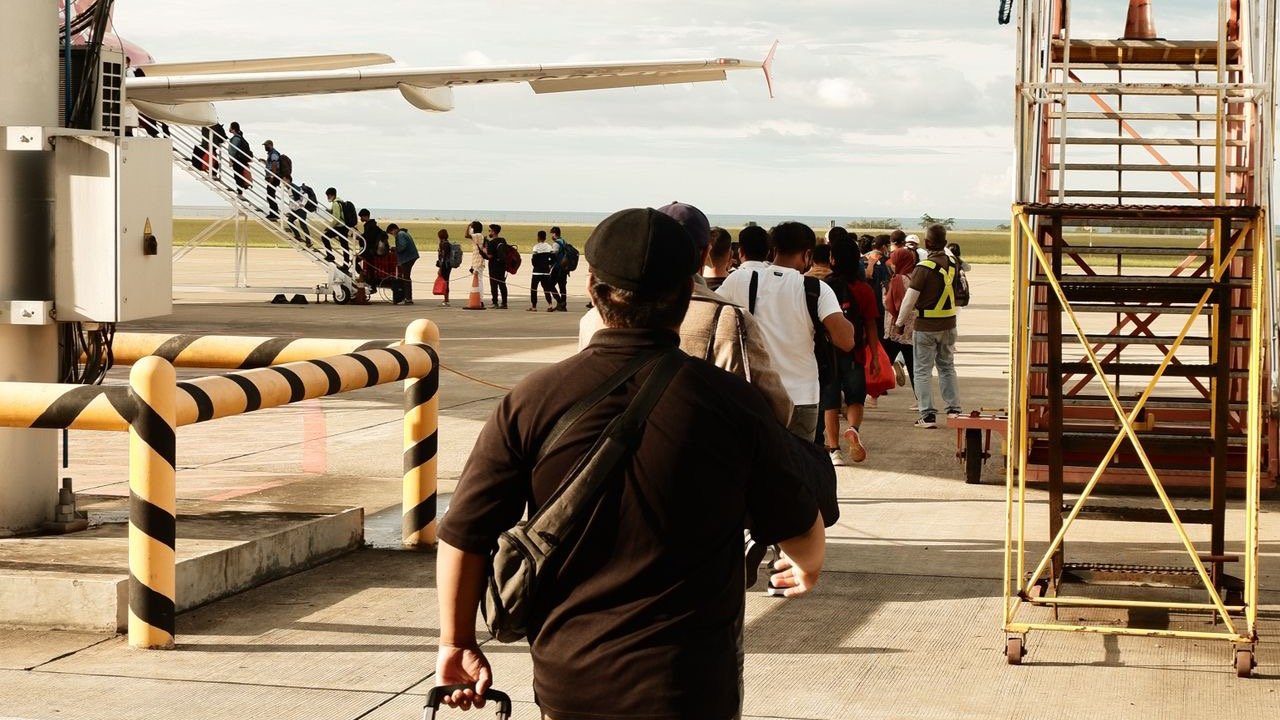
Working abroad from the Philippines is not one big decision. It is a chain of smaller decisions: which country, which job, which recruiter, which contract, which documents. Most problems happen when one link is skipped because the offer feels urgent.
This guide gives you the practical order. It is written for first-time overseas Filipino workers (OFWs), especially people considering caregiving, domestic work, hospitality, construction, healthcare or skilled trades. It does not replace official advice, but it helps you ask better questions at every stage.
Rules and fees change. Use this as a map, then verify each step with the Department of Migrant Workers (DMW) at dmw.gov.ph and your DMW-licensed recruitment agency. Do not rely on screenshots, forwarded messages or a recruiter’s verbal promise.
1. Choose a target country and a realistic job
Start with the job you can actually be hired for, not the country that sounds most exciting. A destination is only realistic if your experience, language level, certifications and budget match what employers there are allowed to hire.
- Check the job’s language, certification and experience requirements. A caregiver job in one country may require a formal certificate that is not asked for in another.
- Compare the cost of living with the salary, not just the salary alone. Rent, transport, food and mandatory deductions can change the real value of an offer.
- Ask whether workers in your occupation can legally change employers. Some visas tie you to one employer, which affects how much leverage you have if the job turns out badly.
- Consider distance and family obligations. Being able to afford a flight home in an emergency is part of the plan, not an afterthought.
2. Verify the recruiter before you invest time or money
A licensed agency is not automatically a good agency, but an unlicensed one should be a hard stop. Check the agency and the specific job separately. A valid license does not prove that the vacancy you saw is real, still open or approved for your position.
- Search the exact agency name in the DMW licensed recruitment agencies directory. Check the license status, validity, address and whether the branch you are dealing with is authorised.
- Verify the job order through the DMW Approved Job Orders page. Match the position, foreign employer or principal, jobsite and agency name.
- Call the agency using the number in the official record, not only the number in a Facebook post or messaging app.
- Ask for a written contract and a clear fee breakdown before you pay anything or submit original documents.
If someone asks you to pay before showing a license, a job order and a written contract, treat that as a warning sign. Legitimate processing can involve costs, but it should be documented and explainable.
3. Prepare documents in the right order
Do not surrender your passport to a recruiter, and do not pay for a “reservation” before you know which employer and which job order you are being processed for. Keep original documents with you unless an official process specifically requires you to submit them.
- As a general rule, a passport valid for at least six months beyond your intended stay, with blank pages. Check the exact rule for your destination.
- PSA birth certificate, NBI clearance and any other civil documents requested for your destination.
- Diplomas, transcripts, TESDA or NC II certificates, professional licences and training records.
- Employment certificates, reference letters and a CV that matches the job you are applying for.
- Medical, insurance and visa documents when the employer or embassy requests them.
- Pre-Departure Orientation Seminar (PDOS) certificate and Overseas Employment Certificate (OEC) or e-OEC where required.
4. Read the contract like a checklist, not a formality
The contract is where the real job is described. Compare it with the job ad, the job order and anything the recruiter told you. If the salary, hours, duties or employer name do not match, stop and ask for a written explanation before signing.
- Exact employer name, worksite and job title.
- Basic salary, allowances, overtime rate and payment schedule.
- All deductions: tax, social security, housing, food, transport, insurance and any fee.
- Working hours, weekly rest day, public holidays, leave and termination rules.
- Accommodation, food, transport and medical coverage: who pays, and what is actually provided.
- Contract duration, renewal, repatriation and the process for resolving disputes.
5. Complete the government process
For most first-time OFWs, the process includes DMW e-Registration, PDOS, contract verification where required and an OEC. The exact sequence depends on your destination and whether you are a household service worker, skilled worker or professional. Ask your DMW-registered agency for the current checklist and confirm it with DMW.
- Create or update your DMW e-Registration account at onlineservices.dmw.gov.ph.
- Attend the required PDOS and keep the certificate.
- Complete contract verification and OEC processing through the correct DMW office or labor office.
- Pay only official fees, ask for receipts and keep a record of every payment.
- Keep copies of your OEC, contract, visa, insurance and employer contact details in a folder you can access offline.
6. Plan the first 30 days before you fly
Your first salary may arrive weeks after you start, and some employers deduct a deposit or pay on a fixed cycle. Plan for at least one month of living expenses, plus an emergency reserve. Do not remit every peso home in the first month and leave yourself with nothing for transport, food or a phone.
- Carry a small amount of local currency and make sure your bank card works abroad.
- Save the Philippine Embassy or Consulate address and emergency number for your destination.
- Arrange a local SIM and transport plan before your first working day.
- Tell a trusted family member where you will live and who your employer is.
- Keep a digital and paper folder with your contract, passport copy, visa, insurance and emergency contacts.
7. Know where to ask for help
Save these before you leave. If you are already abroad and need urgent help, contact the nearest Philippine Embassy or Consulate and the DMW or Overseas Workers Welfare Administration (OWWA).
- Department of Migrant Workers for licensing, job orders and worker advisories.
- DMW online services for e-Registration and OEC-related services.
- DMW Approved Job Orders to check whether a vacancy is listed.
- Philippine Embassy in Ankara for Filipinos in Türkiye.
- Department of Foreign Affairs for embassy and consulate contacts.
A simple checklist
- I know which job and country I am targeting, and why.
- I checked the agency in the DMW directory, not only on Facebook.
- I checked the specific job order and matched the employer, position and jobsite.
- I have a written contract and a fee breakdown before paying.
- My passport is valid and my core documents are complete.
- I know the PDOS, OEC and visa steps for my destination.
- I have at least one month of living expenses and an emergency contact plan.
- I have copies of every document and receipt.
Browse by category
Sources and further reading
- DMW Approved Job Orders
- DMW Online Services
- DMW e-Services Portal
- Philippine Embassy in Ankara, Türkiye
Image credit
Photo: Jasper Mendoza on Pexels. Licensed under the Pexels License.
Last reviewed: November 2026. Rules and fees can change; verify with DMW before acting.